

Seared Baby Squid or Cuttlefish, Mediterranean Style

A plate of small squid or cuttlefish, seared hard in olive oil and tossed with garlic and parsley, can taste like a seaside lunch in Spain, Greece, Portugal, or southern Italy. It is fast, inexpensive, deeply Mediterranean, and much easier to make at home than most people think. These dishes each cost well under $10 and are ready in about 10 minutes (after you thaw the seafood, if using frozen).
If you have traveled around the Mediterranean, you have probably seen squid and cuttlefish everywhere. Squid often shows up as fried calamari, crisp and salty with lemon on the side. Cuttlefish, especially in Spain and Portugal, is often treated more simply: seared on a hot surface with olive oil, garlic, parsley, and salt.
Both Squid and Cuttlefish are excellent. They are also closely related, but they are not the same seafood. Once you understand the difference, you can shop smarter, cook them better, and make a simple meal that feels far more special than the short ingredient list suggests. They have highly similar nutritional profiles, but this dish is under 250 calories and offers 20 grams of protein per serving. So it's definitely GLP1/high-protein friendly!

Baby squid and baby cuttlefish are related, but they cook a little differently
Squid and cuttlefish are both cephalopods, which also puts them in the larger seafood family that includes octopus. They have a clean, oceanic flavor and a firm texture that softens when cooked quickly.

The key phrase is cooked quickly.
Both squid and cuttlefish can become rubbery when they spend too long in a hot pan. That is why this recipe uses very high heat and a very short cooking time. You are not trying to slowly simmer them. You are trying to sear them, just long enough for the outside to tighten and take on flavor while the flesh stays tender.
Here is the practical difference for home cooks:
Squid | Cuttlefish |
More common in many U.S. seafood markets | Easier to find in some Asian, Spanish, and Portuguese groceries |
Often sold as calamari, rings, tubes, tentacles, or whole baby squid | Often sold whole, cleaned, or frozen in small packages |
Body can be firmer than the tentacles | Body is often more tender, while tentacles can be firmer |
Usually costs more than baby cuttlefish in many markets | Often cheaper, especially frozen |
This is not a strict rule in every store. Prices vary by region, season, supplier, and whether the seafood is fresh or frozen. Still, in many everyday shopping situations, baby cuttlefish can be the better value.
On one recent shopping trip, I found a 12 oz. package of frozen baby cuttlefish at an Asian grocery for $3.99 per pound. The previous week, I bought baby squid from a nationwide frozen seafood source for $8.99 per pound. Both were still affordable for seafood, but the cuttlefish was the clear bargain.
That matters because this recipe is exactly the kind of meal that rewards a little bargain hunting. A half pound of baby squid or cuttlefish is enough for two people when served with bread and salad. It cooks in minutes. It feels like restaurant food, but it does not require a restaurant budget.

Where to buy them and what to look for
Baby squid is easier to recognize because many shoppers already know it as calamari. Depending on the store, you may see it as tubes, rings, tentacles, or whole cleaned baby squid. For this dish, whole baby squid with tentacles is ideal. The bodies stay juicy, and the tentacles add texture.
Baby cuttlefish can be a little harder to find. The best places to look are:
Asian grocery stores with a strong frozen seafood section
Spanish, Portuguese, or Mediterranean markets
Specialty seafood markets
Online frozen seafood stores
Frozen is perfectly fine here. In fact, frozen baby squid or cuttlefish can be more reliable than “fresh” seafood that has been sitting in a display case. Much of the seafood sold as fresh has been previously frozen anyway. With frozen seafood, you often get good quality at a better price, especially if you thaw it properly.
Look for packages that are cleanly frozen, without a heavy layer of ice crystals. A little frost is normal. A thick snow-like coating can mean the package has thawed and refrozen, or has been sitting too long.
When you get it home, thaw it in the refrigerator if you have time. If you need it sooner, place the sealed package in a bowl of cold water. Do not use hot water. It can start cooking the outside and hurt the texture before the seafood ever reaches the pan.
Once thawed, pat the squid or cuttlefish dry as well as you can. Surface moisture is the enemy of searing. If the seafood goes into the skillet wet, it will steam instead of sear, and the texture will suffer.
The garlic and parsley sauce is the whole point
This dish has almost no sauce in the heavy sense. No cream, no tomato base, no long simmer. The flavor comes from extra-virgin olive oil, garlic, parsley, salt, pepper, and the seafood itself.
One note: you should never use jarred garlic ("jarlic") in this recipe. It has lost most of its flavor, and you will clearly taste the decline. It will not taste right.
That is very Mediterranean. Good ingredients, little fuss, high heat, and a clean finish.
Two good ways to handle the garlic and parsley.
The easiest method is to mince the garlic and parsley, toss them together in a bowl, and add the hot seafood right after searing. The heat wakes up the garlic without frying it, and the parsley stays fresh.

The more traditional-feeling method is to use a mortar and pestle. Grind the garlic into a paste, add chopped parsley, and work it together with a couple of tablespoons of extra-virgin olive oil. This makes a looser, greener mixture that coats the seafood beautifully.
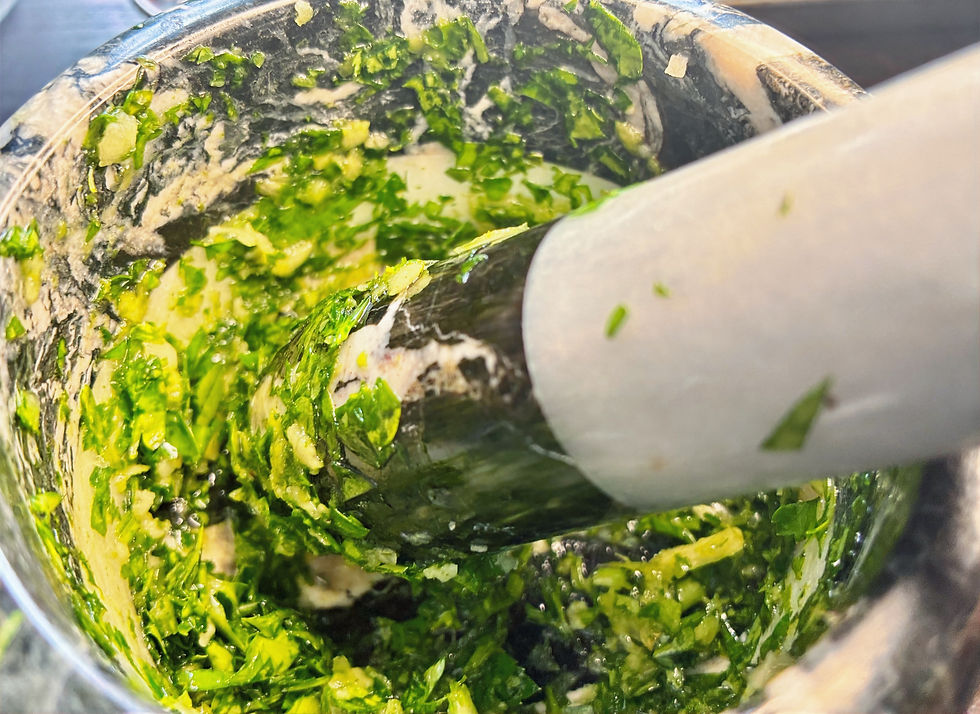
Neither method is wrong. The minced version feels closer to a casual Italian or Greek approach. The mortar-and-pestle version leans more Spanish or Portuguese. On a weeknight, I usually take the easy route and mince everything. The dish still tastes fantastic.
Recipe for seared baby squid or cuttlefish
This recipe serves two as a light main course with bread and salad, or as a generous appetizer.
The most important rule is to cook only what you can eat right away. Some seafood dishes make good leftovers. This is not one of them. Seared baby squid and cuttlefish taste best straight from the pan, hot, tender, and glossy with olive oil.
If you buy a one-pound package, cook half now and save the other half for the next day.
Ingredients
Serves 2
8 ounces baby squid or 8 ounces baby cuttlefish
1-4 cloves garlic, minced (use as much as you like)
1/2 cup fresh flat-leaf parsley, minced
2 tablespoons extra-virgin olive oil
Flaky salt, to taste
Freshly ground black pepper, to taste

Optional for serving
Lemon wedges
Crusty bread
A simple green salad
A few olives
Roasted peppers
Boiled or roasted potatoes
Directions
Prepare the seafood.
If using baby cuttlefish, rinse them well and pat dry. If using baby squid, leave the bodies whole, rinse the bodies, and keep the tentacles. Pat everything dry with paper towels or a clean kitchen towel.
Mix the garlic and parsley.
In a medium bowl, combine the minced garlic and minced parsley. Toss to blend.
Use a mortar if you prefer.
For a smoother coating, put the garlic in a mortar and grind it into a paste with a pestle. Add the parsley and grind again. Stir in a tablespoon of extra virgin olive oil.
Heat the skillet.
Place a large skillet over high heat. Add the 2 tablespoons of extra virgin olive oil and heat until hot but not smoking. A cast iron skillet or stainless steel pan works well because both hold heat.
Sear quickly.
Add the squid and tentacles, or the whole cleaned baby cuttlefish. Toss or stir for about 1 minute. The seafood should firm up and turn opaque. Do not walk away from the pan.
Coat with garlic and parsley.
Immediately transfer the hot squid or cuttlefish to the bowl with the garlic and parsley. Toss well so the heat of the seafood lightly warms the garlic and releases the parsley’s aroma.
Season and serve.
Finish with a squeeze of lemon, flaky salt, and freshly ground black pepper. Serve right away with crusty bread and a side salad.
Thaw and Dry Squid or Cuttlefish Mince parsley and garlic. Put garlic and parsley in a bowl. Heat a pan and add olive oil. Sear Cuttlefish. Sear Squid (Calamari).
That is the whole dish. The speed is part of its charm.
The one-minute cooking rule matters
The most common mistake with squid and cuttlefish is overcooking. A minute can feel too short, but for tiny pieces of seafood in a very hot pan, it is enough.
There are two ways to make cephalopods tender. One is very fast cooking. The other is long, slow cooking, as in a stew or braise. The awkward middle zone is where the texture becomes tough.
This recipe uses the fast method.
A hot skillet gives you the best chance of success. Do not crowd the pan. If the seafood piles up, it releases liquid and steams. If your skillet is small, cook in two batches.
Watch for these signs:
The seafood turns opaque.
The bodies curl slightly.
The edges firm up.
The pan smells savory and briny, not fishy.
Liquid does not pool heavily in the skillet.
If you see a lot of liquid, the pan may not be hot enough, the seafood may be too wet, or the skillet may be crowded. It will still be edible, but it will not have the same seared character.

Squid or cuttlefish: choose what looks best
For Seared Baby Squid or Cuttlefish Mediterranean Style, the best choice is often the one you can find in good condition at a fair price.
Choose baby squid if it is easy to get, cleanly packed, and includes the tentacles.
Choose baby cuttlefish if you find it frozen at an Asian or Spanish grocery, especially if the price is right.
Squid and cuttlefish have similar nutritional profiles, and both will have around 230 calories and 20 grams of protein. Very good for a high-protein or GLP-1-friendly diet.
The flavor and texture differ slightly, but both respond beautifully to the same treatment: high heat, olive oil, garlic, parsley, and salt.
The whole meal comes down to restraint. Do not add too much. Do not cook too long. Do not save it for leftovers. Make just enough, eat it right away, and use good bread to chase every last bit of garlic and parsley from the plate.


Comments