

Best Mashed Potatoes and Turkey Gravy for Thanksgiving
Thanksgiving dinner has a way of turning simple dishes into pressure points. The turkey gets the spotlight, but the mashed potatoes and gravy carry the plate. If the potatoes are gluey or the gravy tastes flat, everyone notices.
The good news is that both can be simple, dependable, and deeply satisfying. Yellow potatoes, butter, and half-and-half make mashed potatoes that are rich without being fussy. Turkey drippings, broth, and a quick cornstarch slurry make a smooth gravy with real roasted flavor.

Why yellow potatoes make the best mashed potatoes
Yellow potatoes are a smart choice for Thanksgiving because they mash into a creamy texture without needing much help. They have a naturally buttery flavor, so the finished potatoes taste rich even before you add butter.
Russet potatoes can make fluffy mashed potatoes, but they can also turn dry if you overwork them. Red potatoes hold their shape well, which is useful for potato salad, but they do not mash as smoothly. Yellow potatoes sit in the sweet spot. They are creamy, tender, and forgiving.
For this recipe, use 3 pounds of yellow potatoes. That gives enough for a family-style Thanksgiving side, with a little wiggle room for seconds. If the gathering is large, use 5 pounds of potatoes and 1.5 sticks of butter. Use a pot large enough for the potato cubes to cook evenly.
The other key ingredients are simple:
Ingredient | Amount | Why it matters |
Yellow potatoes | 3 pounds | Creamy texture and naturally buttery flavor |
Butter | 1 stick | Adds richness and a smooth finish |
Half-and-half | As needed | Loosens the potatoes without making them watery |
Salt | Generous amount for water, then to taste | Seasons the potatoes from the inside |
The most common mistake with mashed potatoes is under-seasoning. Potatoes need more salt than many cooks expect. Salting the cooking water generously helps season the potatoes as they boil, so the final dish tastes balanced instead of bland.
How to make creamy mashed potatoes with butter and half-and-half
Start by peeling the potatoes. Cut them into 1-inch cubes so they cook evenly. Larger pieces take longer, and tiny pieces can absorb too much water.
Place the potatoes in a large pot and cover them with cold water. Add salt generously. The water should taste seasoned, not harsh, but definitely not plain. Starting in cold water helps the potatoes cook evenly from edge to center.
Bring the pot to a boil, then cook until the potatoes are tender. You should be able to slide a fork or knife through a cube with little resistance. Do not stop at “almost tender.” Slightly undercooked potatoes will leave hard bits in the mash.
Drain the potatoes well. Let them sit in the hot pot for a minute or two after draining so extra moisture can steam off. This small step helps the potatoes absorb the butter and half-and-half instead of turning loose or watery.
Next, mash the potatoes using the method that fits the texture you like. Lots of folks fight over the best method to mash potatoes. It all depends on the texture you like. I confess I aspire to a food mill, often use a potato masher for speed, but find mixer potatoes a little gummy.
Tool | Texture | Best for |
Potato masher | Creamy with a few soft bits | A classic homemade texture |
Food mill | Smooth and light | A more polished holiday table |
Hand mixer | Thicker and slightly denser | When texture matters less than speed |
A masher gives you the most control. A food mill gives a very smooth result without overworking the potatoes. A mixer works if you don't mind a thicker texture, but stop as soon as the potatoes come together. Overmixing can make potatoes gummy.
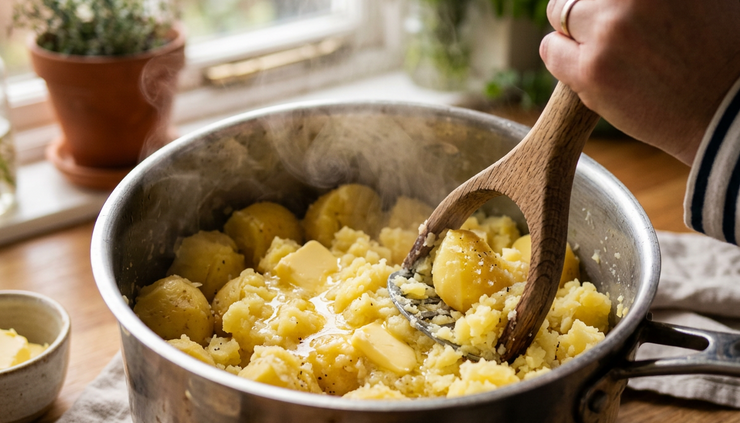
Once mashed, add 1 stick of butter, cut into tablespoon-sized pieces. The smaller pieces melt quickly and distribute evenly. Fold or mash the butter in while the potatoes are still hot.
Add half-and-half a little at a time until the potatoes reach your preferred consistency. No single amount is perfect because potatoes vary, and so does personal taste. Some people like mashed potatoes thick enough to hold a gravy well. Others like them looser and silky.
A good rule is to add half-and-half gradually, then pause. Potatoes continue to loosen slightly as the dairy settles in. You can always add more, but you cannot easily take it back.
Taste before serving. Add more salt if needed. If the potatoes taste rich but a little dull, they probably need salt, not more butter.
How to hold and reheat mashed potatoes for Thanksgiving
Mashed potatoes are one of the easiest Thanksgiving sides to make ahead, which is a gift when the oven and stovetop are crowded.
After mashing, transfer the potatoes to a serving dish and cover them. You can keep them in the refrigerator for up to 24 hours before serving. This makes them a useful make-ahead dish for Thanksgiving Eve cooking.
To reheat them, use gentle heat. Cold mashed potatoes firm up, so they usually need a splash of half-and-half to return to the right texture.
Good reheating options include:
Covered baking dish in a low oven Stir once or twice and add a little half-and-half if needed.
Saucepan over low heat Stir often so the bottom does not scorch.
Slow cooker on warm or low Useful when the stovetop is full, but stir occasionally and watch the texture.
If reheating in the oven, dot the top with a little extra butter before covering the dish. The butter melts into the potatoes and helps keep the surface from drying out.
If the potatoes seem stiff after reheating, add warm half-and-half one splash at a time. Cold dairy can cool the dish down and make it harder to judge the final texture.
The best make-ahead mashed potatoes are slightly thicker going into the fridge than you want them at the table. Reheating gives you a chance to loosen them perfectly.
How to make smooth turkey gravy from the roasting pan
Turkey gravy should taste like Thanksgiving, not just thickened broth. The roasting pan provides the flavor. The browned bits, drippings, and juices form the base of the gravy.
Once the turkey is done, remove it from the roasting pan and place it on a platter or carving board. Cover it loosely with foil and let it rest. Resting lets the juices settle and gives you time to make the gravy.
Strain the contents of the roasting pan, but do not ignore the bottom of the pan. Scrape up the browned bits because they carry a lot of flavor. If the pan is safe to place over a burner, you can add a little broth or water and scrape while it warms. If not, scrape carefully with a wooden spoon and transfer everything to a pot.
Add the strained pan contents to a pot with 2 cups of broth. Turkey broth is ideal, but chicken broth works well. Add additional water if needed to reach the amount of gravy you want or to temper very strong drippings.
Warm the mixture over medium heat. Taste it before thickening. If it already tastes salty, wait before adding any more seasoning. If it tastes weak, let it simmer for a few minutes to concentrate the flavor.
In a small bowl, mix 3 tablespoons of cornstarch with 3 tablespoons of water. Stir until completely smooth. This mixture is called a slurry, and it helps the cornstarch disperse into the gravy without clumping.
When the broth and pan juices are hot, whisk in the slurry. Keep whisking as the gravy comes to a boil. Cornstarch needs that boil to fully thicken. Once it bubbles and turns glossy, let it cook briefly while whisking.
Taste again and correct the seasoning. Add salt if it tastes flat. Add a little water or broth if it tastes too strong. If you like pepper in Thanksgiving gravy, add it near the end so the flavor stays fresh.

How to fix the most common mashed potato and gravy problems
Even a simple recipe can shift a little on Thanksgiving Day. Potatoes vary in moisture. Roasting pans vary in saltiness. Guests run late. The key is knowing how to adjust without panic.
For mashed potatoes that are too thick, add warm half-and-half a splash at a time. Stir gently and give the potatoes a moment to absorb it before adding more.
For mashed potatoes that are too loose, keep them warm uncovered for a few minutes so steam can escape. If they are very loose, transfer them to a saucepan over low heat and stir until they tighten slightly.
For potatoes that taste flat, add salt in small pinches. Stir and taste between additions. Butter adds richness, but salt brings the potato flavor forward.
For gravy that is too thin, mix another small spoonful of cornstarch with the same amount of cold water, then whisk it into the simmering gravy. Bring it back to a boil so it thickens fully.
For gravy that is too thick, whisk in broth or water a little at a time. Keep the heat on low while you adjust.
For lumpy gravy, strain it through a fine-mesh strainer. If the lumps are small, a vigorous whisking may be enough. Avoid adding dry cornstarch directly to hot gravy because it will clump.
If your gravy tastes too salty, add unsalted broth or water. If you have extra unsalted pan juices, even better. Don't try to fix salty gravy with more cornstarch because thickening doesn't reduce salt.
A simple Thanksgiving timing plan
The easiest way to make mashed potatoes and gravy feel calm is to separate what you can do ahead of time from what should happen at the last minute.
You can make the mashed potatoes the day before. Store them covered in the refrigerator. On Thanksgiving Day, reheat them gently and adjust the texture with half-and-half. Transfer them to a warm serving dish and cover until the meal is ready.
Make the gravy after the turkey comes out of the oven. That timing works well because the turkey needs to rest before carving. While it rests under foil, use the pan drippings to make the gravy.
Here is a practical flow:
Make mashed potatoes up to 24 hours ahead.
Refrigerate them covered in a serving dish or storage container.
Roast the turkey on Thanksgiving Day.
Move the turkey to a platter or board and cover it loosely with foil.
Strain and scrape the roasting pan.
Make the gravy while the turkey rests.
Reheat the mashed potatoes and adjust the consistency.
Taste both dishes before they go to the table.
That last step matters. Thanksgiving food often needs one final adjustment. A small pinch of salt, a splash of half-and-half, or a spoonful of broth can make the difference between good and great.

The holiday side dishes that hold the whole plate together
Great Thanksgiving cooking does not have to be complicated. These mashed potatoes use yellow potatoes, butter, half-and-half, and enough salt to make the flavor clear. The gravy uses what the turkey already gives you, plus broth and a simple cornstarch slurry for a smooth finish.
Make the potatoes ahead if that helps the day run better. Save the gravy for after the turkey rests, when the pan drippings are ready. Keep tasting as you go, and trust small adjustments.
When the potatoes are creamy and the gravy is hot, the whole Thanksgiving plate comes together.


Comments